

Views: 0 Author: EECA PACKAGE Publish Time: 2026-11-27 Origin: Site


BEAUTY OF GIVING / PACKAGING EDITORIAL FEATURE
A wooden drawer wrapped in linen and stitched with palm trees is turning the humble date into a luxury gift — and giving packaging buyers a new story to tell.
There is a moment, somewhere between the last date of Ramadan and the first tray of Eid sweets, when a gift stops being about the food and starts being about the thought behind it. The date — sweet, symbolic, deeply rooted in the region's culture — has always been central to that moment. What has changed, quietly but decisively, is the vessel it arrives in.
Enter the dates gift box: a handcrafted wooden box wrapped in natural linen, its lid stitched with golden palm trees and framed in the kind of geometric border that has decorated Islamic objects for centuries. Slide the drawer open and a row of glossy, premium dates sits neatly in divided compartments. It is at once a box, a keepsake and a small piece of craft — and it is rapidly becoming the most talked-about format in seasonal food packaging.
This is not simply a container with a pretty surface. It is a deliberate response to a market that has started to care as much about the unwrapping as the contents. Retailers, hotels, corporate gifting teams and date growers are all asking the same question: how do we make a box of dates feel like a gift worth keeping? The answer, increasingly, is wood, linen and a needle.
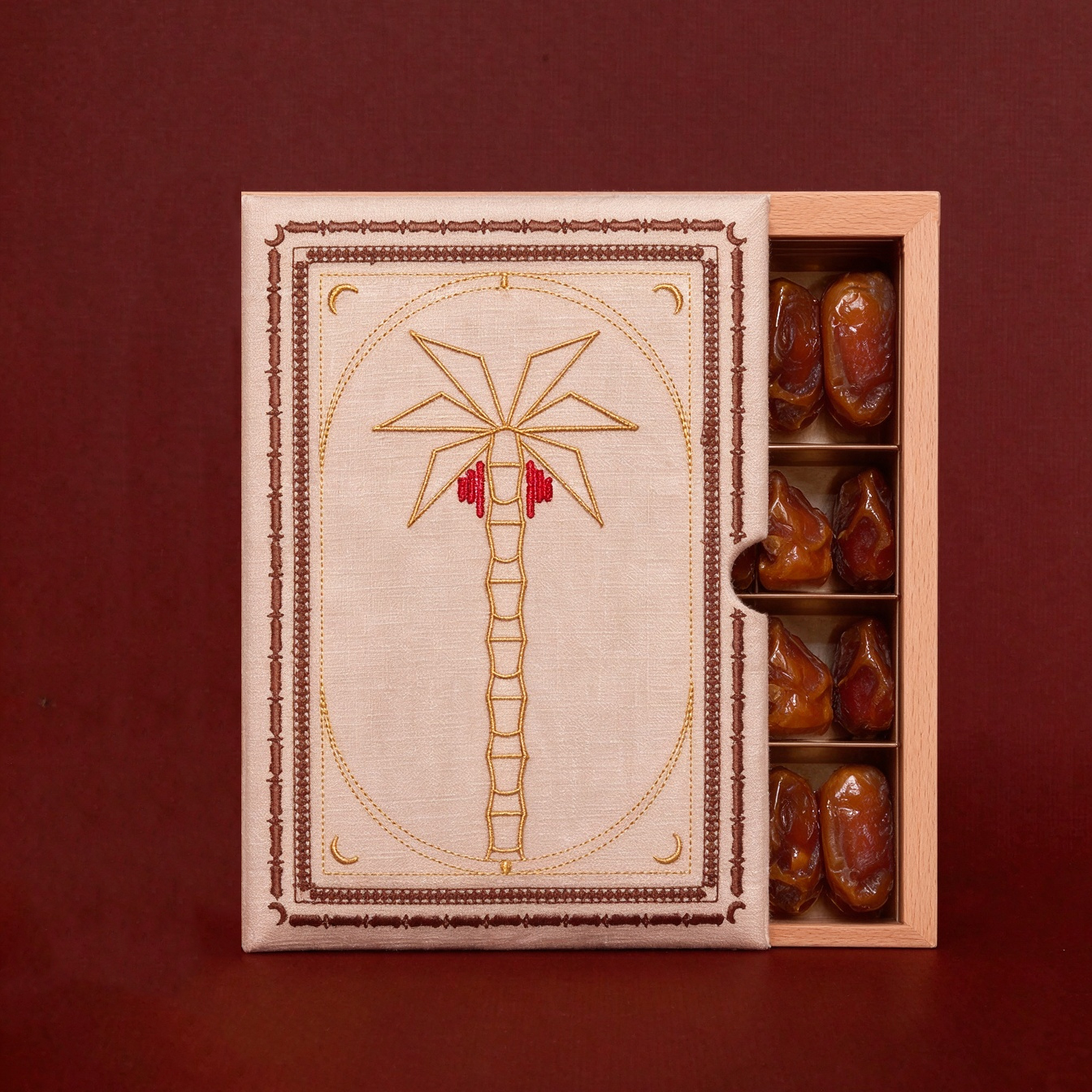
Natural linen, golden palm-tree embroidery and a sliding wooden drawer: the modern dates gift box.
To understand the rise of the dates gift box, it helps to look at how gifting habits have shifted. For years, dates were given in plain cartons, plastic trays or generic tins — functional, forgettable, and opened and discarded within minutes. That was perfectly adequate when the gift was judged by weight alone. It is no longer adequate.
Today's buyers are shaped by two forces. The first is the "unboxing" culture that has migrated from consumer electronics into food and hospitality. A gift is photographed, shared and remembered long before it is eaten. The second is a renewed appetite for objects that carry cultural meaning. In a market saturated with generic packaging, a box that visibly references the date palm — the tree at the heart of Middle Eastern heritage — feels both authentic and contemporary.
The timing could not be better. Ramadan and Eid are, by nature, seasons of generosity. Families exchange sweets, colleagues exchange dates, and hosts look for something that signals respect without ostentation. A dates gift box made of wood and linen does exactly that. It is modest in scale but rich in intention — the kind of object a recipient keeps on a shelf long after the last date has been eaten.
There is a commercial logic here too. Premium dates command premium prices, and packaging is the most visible proof of that premium. A well-made box protects the product, elevates the perceived value and gives retailers a clearer story to tell at the shelf. In category after category, from chocolate to tea, the container has become part of the product. Dates are simply the latest — and perhaps most natural — candidate.
"Luxury" is a word that gets used loosely in packaging, but a genuine luxury dates box earns it through materials and making rather than marketing. Start with the frame: solid wood, chosen for its warmth and weight, cut to hold its shape season after season. Unlike folding cartons, a wooden box does not sag when filled, and it does not lose its edges in transit.
Over that frame goes a layer of natural linen. The fabric is more than decoration. It softens the hard geometry of the wood, adds a tactile grain that photographs beautifully and gives the embroidery something to live on. The palette is deliberately restrained — warm cream, deep burgundy, antique gold and the red of the dates themselves — so the box reads as elegant rather than loud.
Then comes the detail that defines the piece: hand embroidery. Palm trees, worked in gold and red thread, rise from a bordered field, with crescent motifs tucked into the corners. The stitching is not printed; it is sewn, thread by thread, which is why each box carries the slight, human irregularity that machine-perfect prints lack. This is the difference between a product that looks expensive and one that feels considered.
Of course, a luxury dates box is also judged by how it opens. A clean sliding drawer, a smooth edge, a compartment that keeps each date in its place — these are the details that turn a decorative object into a usable one. The best examples balance ceremony with convenience: beautiful enough to present, practical enough to reach into at breakfast.
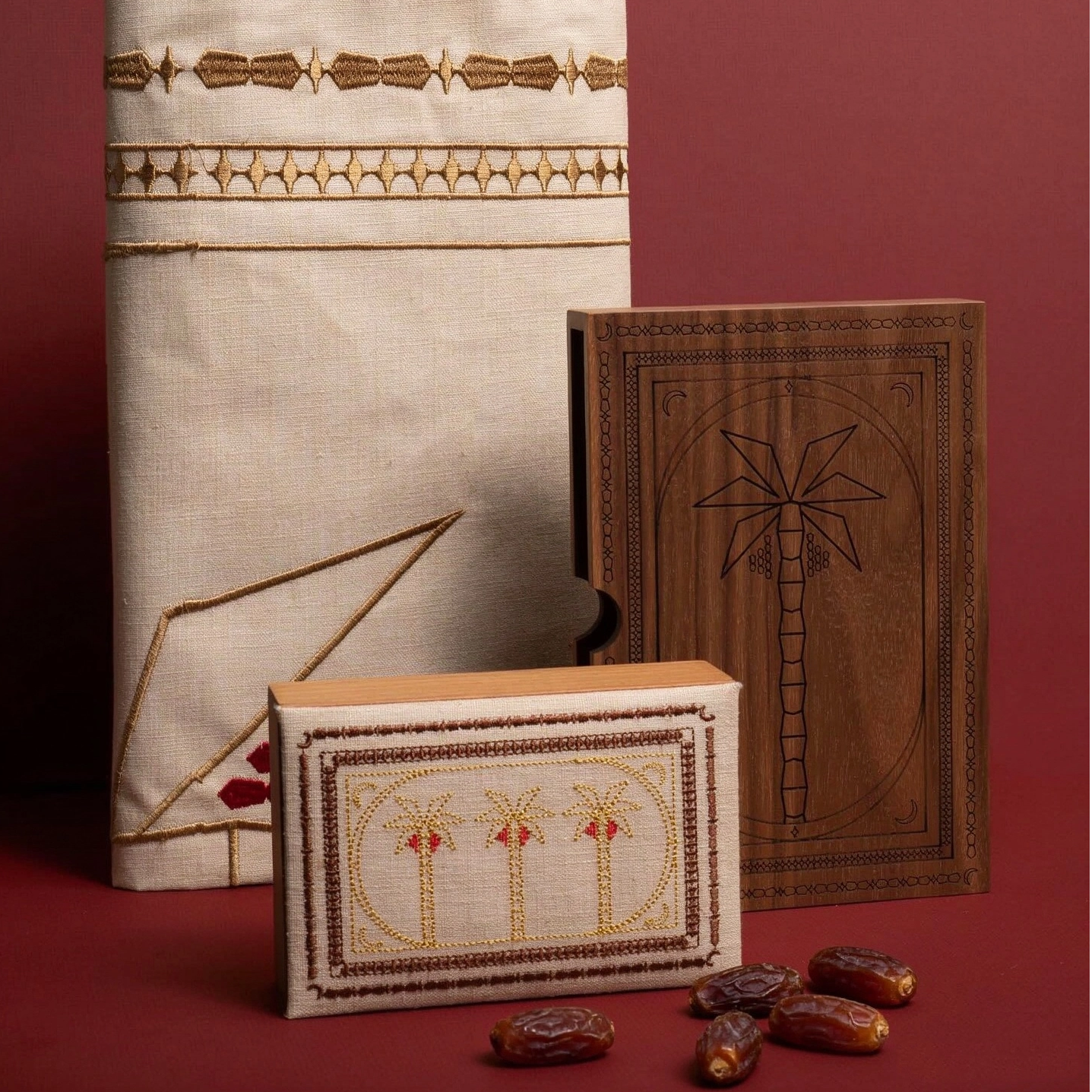
One design language, several finishes: engraved wood and linen embroidery share the same palm-tree motif.
If there is a single reason buyers keep returning to this format, it is the surface. An embroidery box belongs to a very different tradition from a printed carton. Embroidery is slow, tactile and inherently personal — qualities that translated surprisingly well into food packaging once brands began looking for "heritage" stories that felt real rather than manufactured.
The process starts with the motif. The date palm is an obvious choice, but what makes the design work is the restraint with which it is drawn: a slender trunk, a fan of fronds, clusters of red fruit, all contained within an arched panel and a repeating border. The border matters. Its interlocking geometry recalls the tilework and manuscript illumination of Islamic art, giving the box a visual lineage that customers recognise even if they cannot name it.
The embroidery dates box then becomes a canvas for personalisation. Because the surface is stitched rather than printed, brands can adapt the thread colours, the motif and the layout without retooling a printing plate. A hotel can commission a box in its own palette; a date grower can add a family mark; a corporate gifting team can place a discreet logo within the border. The result is custom work that still feels handmade.
It is worth noting that the same palm motif also translates beautifully to laser-engraved wood, and many buyers now offer both finishes within one range — embroidered linen for the flagship gift, engraved wood for the everyday line. That flexibility is part of why the format travels so well across price points and occasions.
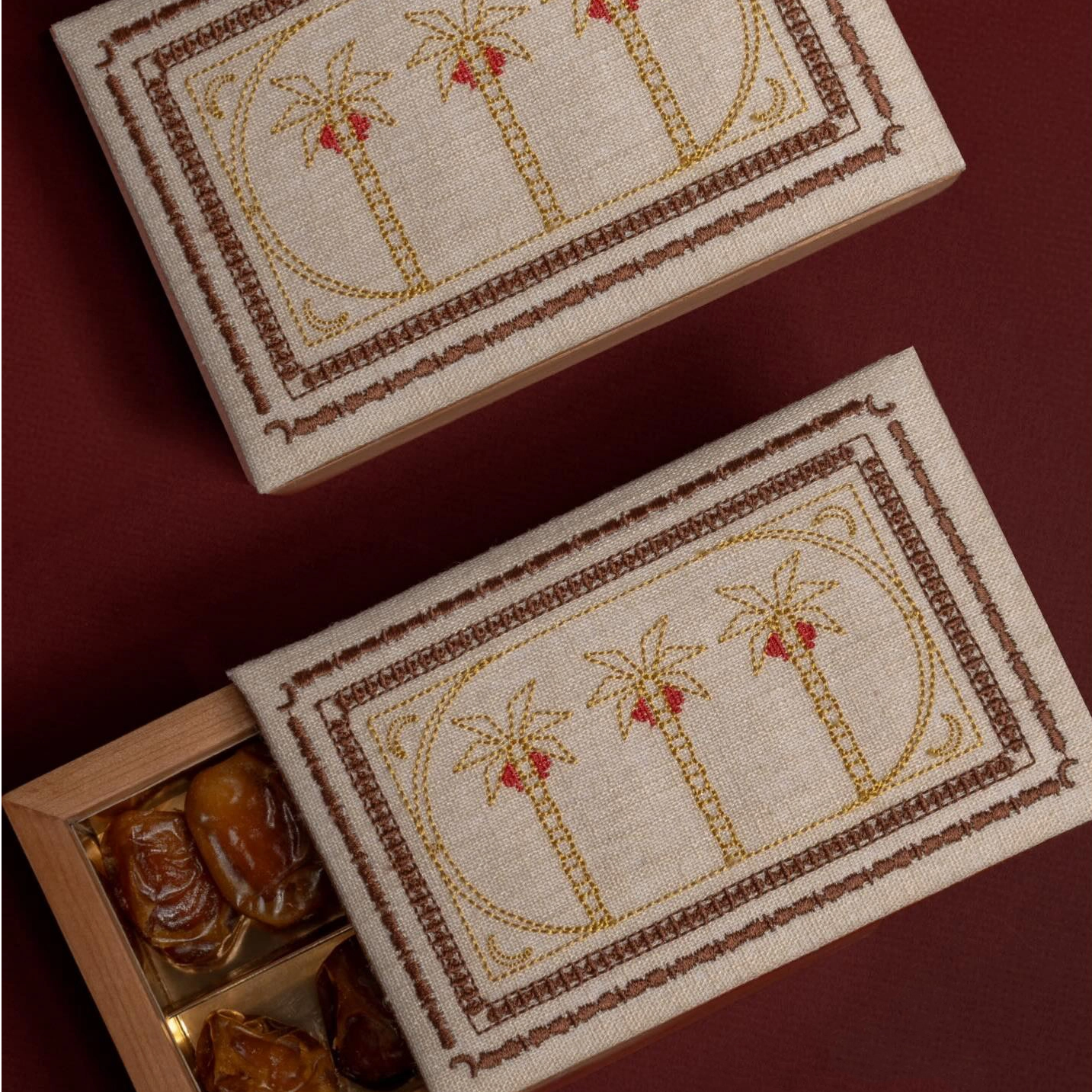
Repeated palm motifs and divided interiors: the design works as a pair and as a single gift.
A beautiful box that crushes its contents is a failure, and this is where the food grade date box concept becomes important. Premium dates are soft, sticky and easily marked. They need a surface that will not transfer odour, a structure that prevents them rolling into one another, and enough rigidity to survive a courier van in July.
The drawer design answers all three. Made from wood with a smooth, sealed finish, the interior is naturally stable and easy to wipe clean. Dividers separate the dates into individual wells — often two across and several down — so each piece sits upright and untouched until the recipient lifts it out. The drawer slides rather than lifts, which means the lid never has to be prised off above the fruit, and the contents stay visible the moment it is opened.
That visibility is a quiet marketing advantage. A tray of neatly arranged dates, framed by linen and gold thread, is an image people photograph. For retailers, that means the packaging does part of the selling before a word is spoken. For gift-givers, it means the gesture reads as generous without needing explanation.
There is also a practical argument for wood over board. A rigid wooden drawer keeps its shape when stacked, protects against pressure and does not absorb the oils that soft fruit can release. For anyone shipping dates across borders — a category that has grown sharply with online gifting — that durability is not a luxury. It is a requirement.
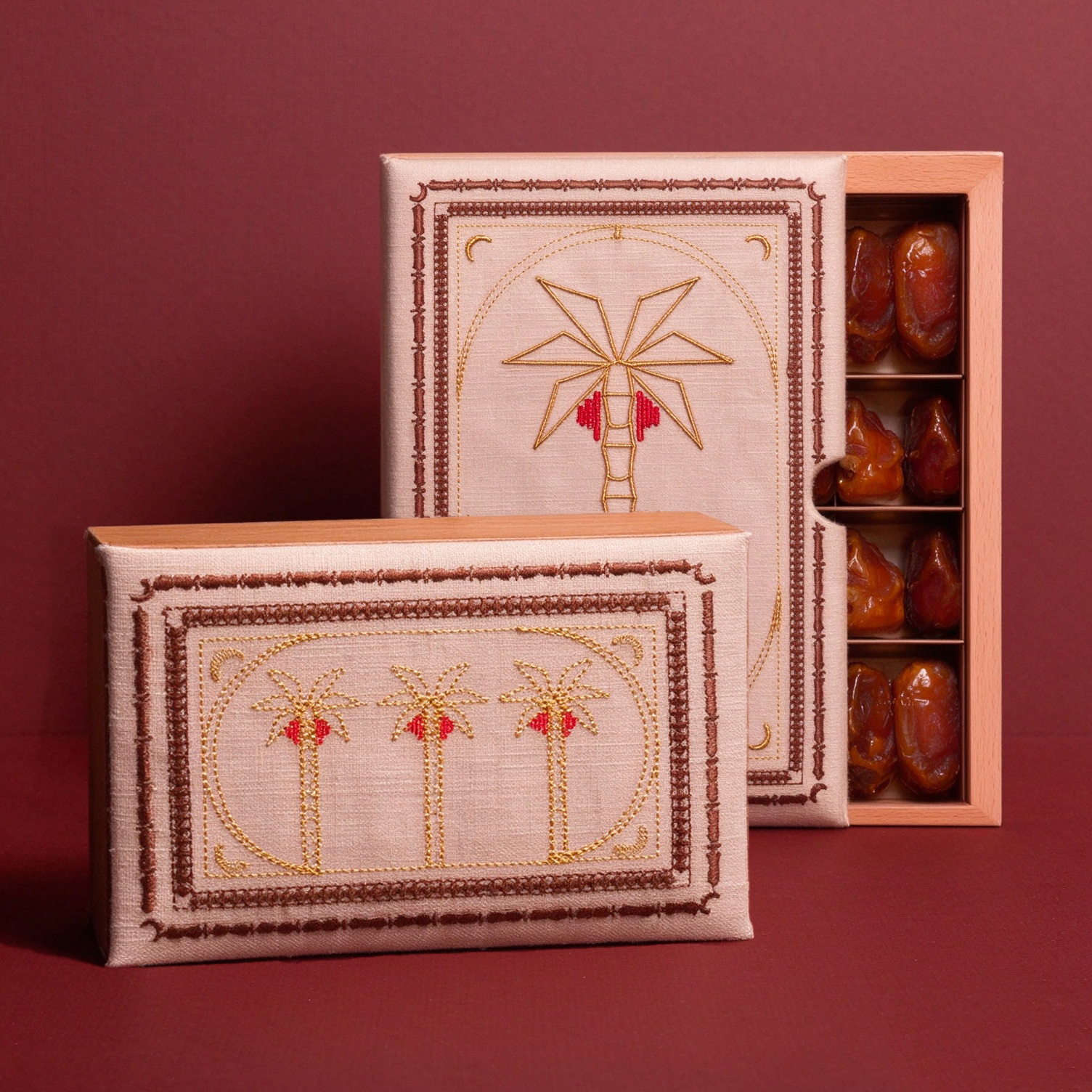
Two sizes, one system: the drawer keeps every date in its own compartment.
Here is where the format becomes genuinely versatile. The same wooden drawer that cradles premium dates also happens to be an excellent home for chocolate — and the chocolate date box has emerged as one of the most interesting crossovers in recent gifting.
Date-filled chocolates, chocolate-dipped dates and nut-stuffed varieties all benefit from the same structure: individual compartments, a protective lid and a surface that signals indulgence. The visual language transfers without modification. A palm tree embroidered in gold reads as naturally on a box of chocolate-dipped dates as it does on a box of loose fruit, and the burgundy-and-cream palette is already the colour code of premium confectionery.
For brands, this is a way to extend a single packaging investment across multiple SKUs. A date grower can launch a plain dates edition for Ramadan, a chocolate-covered edition for Eid, and a mixed gift box for corporate orders — all using the same box with different interior layouts or thread details. That reduces design cost while keeping the shelf presence consistent.
The crossover also opens the door to gifting occasions beyond the holy month. Weddings, housewarmings, business milestones and winter holidays all have room for a box that sits somewhere between confectionery and craft. A chocolate date box is not tied to one calendar date; it is tied to the simple act of offering something sweet and well made.
No discussion of this format is complete without its most important season. Ramadan date boxes are not a niche within the category — they are the category's centre of gravity. Dates break the fast, dates are shared at the iftar table, and dates are among the most traditional gifts of Eid. Packaging that understands this does not need to shout about the occasion; it simply needs to respect it.
That respect shows up in the design choices. The palm tree is a natural emblem of Ramadan, evoking both the fruit itself and the landscape in which it grows. The crescent motifs in the corners are subtle enough to feel celebratory rather than themed. Even the act of sliding a drawer open has a certain ceremony that suits the rhythm of the evening meal — a moment of anticipation before the first date is taken.
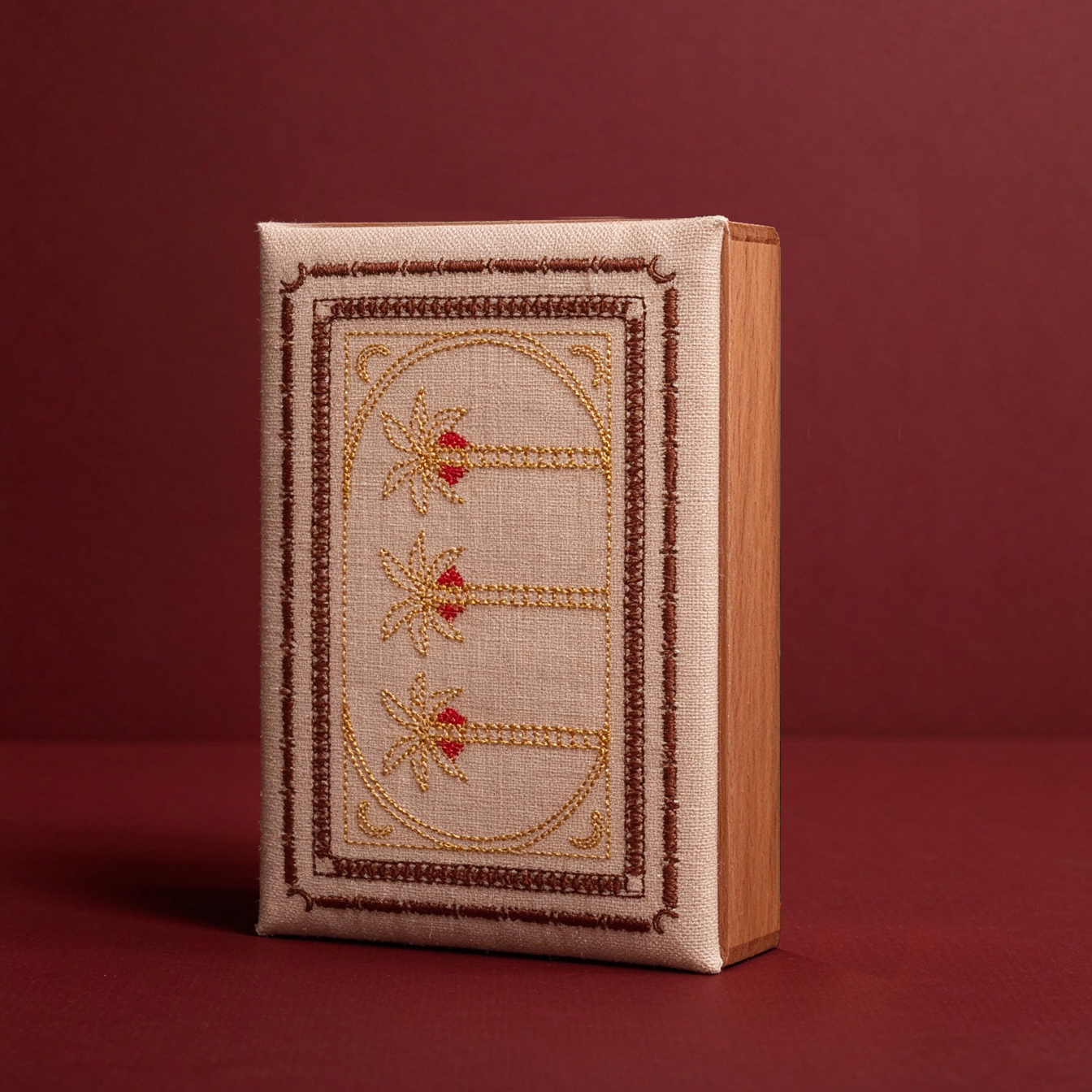
A ceremonial format for a ceremonial season: three palms, red fruit and a deep red ground.
For hotels preparing iftar amenities, for companies sending Eid gifts to clients, and for families assembling trays for relatives, the appeal is the same: the box makes the date feel like a gift rather than a staple. It travels well, it presents well and it carries a visual language everyone in the region understands instantly. In a market where sameness is the default, that recognition is worth a great deal.
Not every gift is intimate. Some are given by the hundred — at a conference, a hotel reception, a wedding, a product launch. This is where the giveaway wooden dates box earns its keep, because it solves a problem that plagues promotional gifts: how to feel valuable without costing a fortune per unit.
A small, linen-wrapped drawer box with a single palm motif does exactly that. It is inexpensive enough to distribute widely, but substantial enough that recipients do not throw it away with the wrapping. The wooden frame survives a handbag or a desk drawer; the linen surface gives a brand somewhere to place a logo; the dates inside make the gift useful rather than merely decorative.
The economics are straightforward. Promotional items are usually judged on cost per impression, and a box that stays on a desk for months delivers far more impressions than a flyer that lasts a day. Add a discreet embroidered or engraved logo and the giveaway wooden dates box becomes a piece of ambient branding — quiet, repeated and difficult to ignore.
This is also a format that scales across budgets. A larger box with a divided drawer suits VIP clients; a slim single-row version suits event bags. Because the construction is modular and the surface customisable, a single supplier can cover an entire gifting programme without designing from scratch each time.
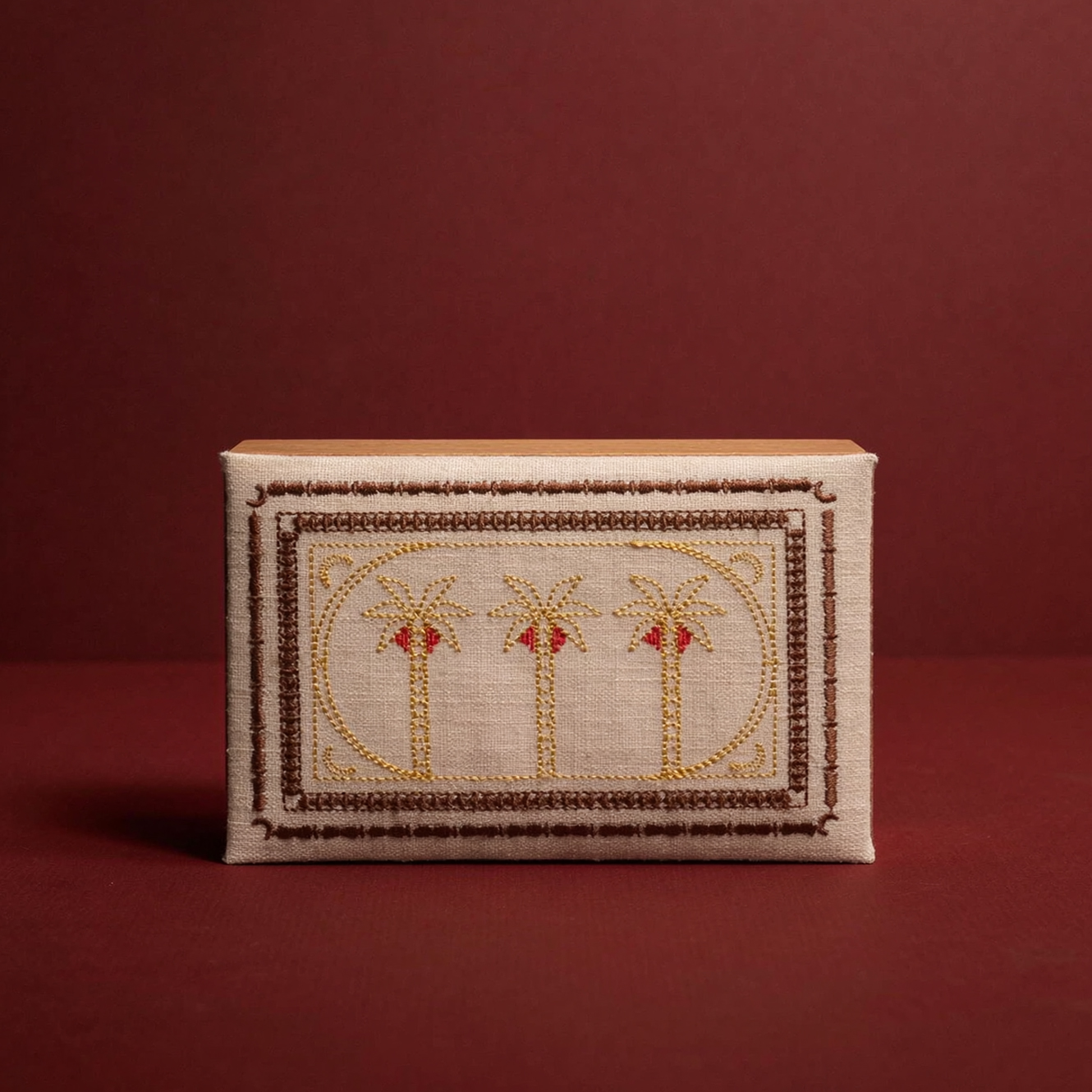
A low, wide profile gives the three-palm embroidery room to breathe — and suits a desk as well as a dinner table.
Behind every attractive box is a manufacturing decision, and this is where dates packaging boxes move from idea to supply chain. The best suppliers in this space do not sell a fixed catalogue; they sell a framework that can be adjusted to a buyer's brand, budget and market.
Size is the first variable. Drawer boxes can be made in tall, wide and slim proportions, with the number of compartments altered to match the product — two dates across, four down, or a single row for a lighter gift. For exporters, this matters: a box designed around the actual date size uses less filler, travels more efficiently and looks better when opened.
The second variable is identity. Logos can be embroidered into the linen, laser-engraved into the wood, or applied as a subtle label inside the drawer. Thread colours can be matched to a corporate palette; the palm motif can be redrawn to include a brand mark. Because the surface is worked by hand, short runs and bespoke colourways are far more practical than with printed cartons.
The third variable is compliance and finish. Food-contact safety, a sealed interior, a smooth drawer action and reliable closure are non-negotiable, particularly for boxes that will cross borders. Buyers should also ask about lining options, divider materials and whether the wood is sourced and treated to consistent standards. A good dates packaging boxes partner will discuss these details before discussing price — a sign that the product has been made before, and made properly.
For brands weighing their options, the practical checklist is short: confirm the internal dimensions against your date size, request a physical sample of the drawer action, ask how the embroidery is finished at the edges, and clarify the minimum order for custom logo work. Get those four answers and the rest tends to follow.
A typical dates gift box combines a solid wooden frame with a natural linen wrap and hand-embroidered detailing. The drawer is usually divided into compartments to hold individual dates securely.
Capacity depends on the size and layout. Common configurations hold six to eight premium dates in divided wells, while slimmer single-row versions are designed for lighter gifts or chocolate-dipped dates.
Yes. A properly made food grade date box uses a sealed, smooth interior that wipes clean and does not transfer odour or colour to the fruit. Always confirm the exact lining and finish with your supplier.
Yes. Size, compartment layout, thread colours and branding can all be adapted. Logos are commonly embroidered into the linen, laser-engraved into the wood or placed as an internal label.
No. While ramadan date boxes are the strongest season, the same format works for weddings, corporate gifting, hotel amenities and chocolate or confectionery gifts throughout the year.
Absolutely. A chocolate date box uses the same drawer and dividers, making it suitable for chocolate-dipped dates, date-filled chocolates and mixed sweet assortments.
Trends in packaging come and go, but the best gift boxes share one quality: they are kept. A linen-wrapped drawer with a palm tree stitched into its lid is not discarded with the wrapping paper. It becomes a jewellery tray, a desk organiser, a reminder of a generous host — and every time it is seen, the brand or family that gave it is seen too.
That is the real argument for the hand-embroidered wooden dates box. It protects a delicate product, it honours a cultural tradition and it turns a simple gesture into something memorable. For date growers, retailers and gifting teams looking for a format that carries as much meaning as the fruit inside it, this is a box worth opening.
Ready to find the right format for your dates? Explore the collection and choose the dates gift box that fits your brand, your dates and your occasion. Your next gift will never feel the same again.


